Tag: silicon valley
The $12.5 Trillion-Dollar Question: When Will That AI Bubble Burst?

The $12.5 Trillion-Dollar Question: When Will That AI Bubble Burst?

I often get that question. I can’t say I have a very good answer.

Going back to the last bubbles, it would be difficult to identify any events in the world that precipitated the collapse of either the 90s tech bubble or the housing bubble in the 00s. Both times the economy seemed to be moving along at healthy clip just prior to the collapse.

There had been warnings in both cases. In the 1990s bubble it was hardly a secret that many totally crazy businesses were raising hundreds of millions of dollars in IPOs. Investors were worried about missing out on the next Microsoft, so they were willing to throw big bucks at seemingly hare-brained schemes, just in case.

In the housing bubble, the fact that many of the mortgage loans being issued were of rather dubious quality was hardly a secret. Lenders were issuing loans at 100 percent of appraised value and sometimes more. In many cases, people were borrowing in excess of the value of their home to cover closing costs or moving expenses. The verification on these loans was minimal. There were frequent jokes about “liar loans” or NINJA loans, with NINJA standing for “no income, no job, and no assets.”

But these warnings came well before the crashes. There is no obvious event that caused the stock market to turn in March of 2000 or the housing bubble to peak in the summer of 2006.

The Federal Reserve arguably played a role in the latter. The federal funds rate rose from its tech recession low of 1.0 percent in the spring of 2004 to a peak of 5.25 percent in the summer of 2006. This made mortgages more expensive, which made it harder for people to pay bubble inflated prices to buy homes. But the increases were gradual and the impact on 30-year mortgages was minimal. Of course, since many borrowers were taking out adjustable-rate mortgages at the time, higher short-term rates did matter.

In the 1990s, there was only a very modest increase in the federal funds rate, rising from 5.5 percent in the fall to 6.0 percent by March. It rose further into the spring, but the market had already turned at that point.

With this history, I don’t know what might cause the bubble to burst. Just to pick up on a point I made last summer, it is very hard to tell a story where the current price of the big AI-related companies makes sense. Nvidia has a current market capitalization of $4.8 trillion. If investors expect a 10 percent nominal return on the stock, in ten years it would have a market capitalization of $12.5 trillion. If we assume its earning have caught up so that it has a price/earnings ratio at that time of 20 (pretty high for a mature company), then its after-tax profits in 2036 would be $620 billion. That would be almost 15 percent of all after-tax profits in the U.S. economy, according to the Congressional Budget Office’s projections.

The idea that one company would have 15 percent of all corporate profits is not impossible, but it doesn’t seem like the most likely scenario. Alphabet, which is obviously an incredibly successful company, currently has about 4.6 percent of after-tax profits, so will Nvidia be more than three times as large relative to the economy in a decade than Alphabet is today?

Furthermore, is that anyone’s best bet? If this is a possible but not likely scenario then people must be expecting considerably higher returns on their investments in Nvidia stock, say 15 percent or 20 percent. In those cases, we would need for the company’s profits to be 25 or 30 percent of all corporate earnings in 2036 to make sense of Nvidia’s share price. This seems to be getting pretty far-fetched.

Who knows when or what will make the bubble burst. Maybe the Chinese competitors get enough market share with their lower-priced AI that it will become clear even to the Silicon Valley geniuses that their big jackpot exists only in their heads. Maybe their revenues will stop meeting projections. But whatever causes it, the story of the collapse is not likely to be pretty.

Dean Baker is a senior economist at the Center for Economic and Policy Research and the author of the 2016 book Rigged: How Globalization and the Rules of the Modern Economy Were Structured to Make the Rich Richer. Please consider subscribing to his Substack.

Reprinted with permission from Dean Baker.
Going Nowhere, Or Learning To Ignore The Plutocrats Who Cried 'Commie!'

Going Nowhere, Or Learning To Ignore The Plutocrats Who Cried 'Commie!'


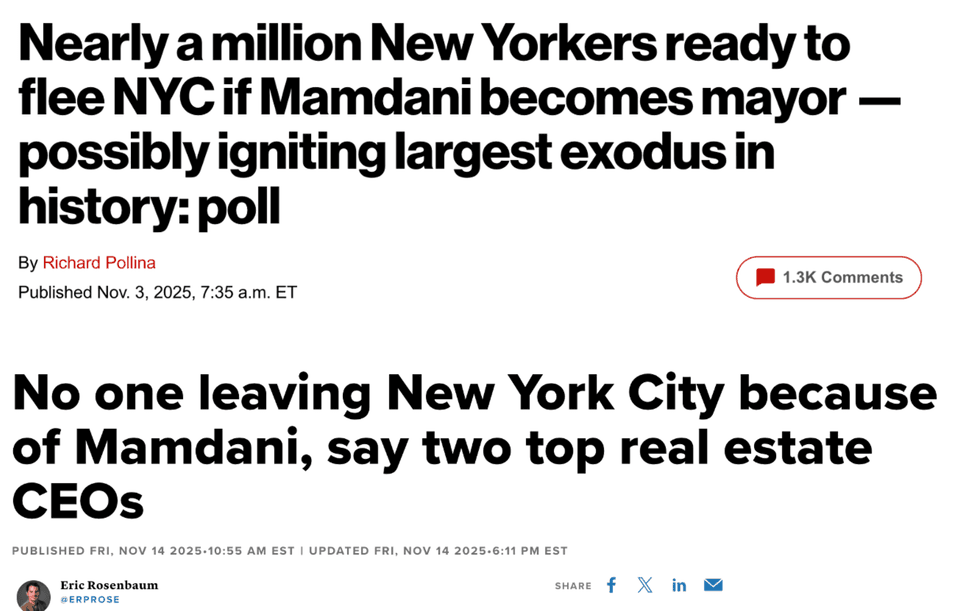
The reaction of plutocrats to the Zohran Mamdani campaign — histrionic freakout before the mayoral election, with promises to flee New York City if he won, followed by a big “never mind” when he did — can teach us a couple of things.


First, ignore billionaires when they threaten to take their marbles and go home. The big money always responds to threats of tax hikes, or even mere verbal criticism, by threatening to go all Ayn Rand and move to Galt’s Gulch. In reality, they won’t even move to Florida.

You may recall that a couple of years ago there was a lot of talk about how the financial industry was going to flee blue-state taxes and wokeness and move to Miami. And to be fair, some companies did move. Notably, Ken Griffin, a hedge-fund billionaire and a big Trump backer, made a splash when he did indeed move the global headquarters of Citadel and Citadel Securities from Chicago to Miami.

But the second headline above comes from a CNBC report on remarks from top commercial real estate executives, who see Mamdani having little impact on booming demand for offices in New York. This includes plans by Griffin to rent substantial space in a new building at 350 Park Avenue. “Ken is committed and will have more employees at 350 Park than in Miami,” said one executive.

Why won’t plutocrats flee New York? For one thing, they’re not stupid (although they were hoping that voters were.) Mamdani might — might — be able to raise their taxes a bit. But they don’t really believe that free buses and city-run grocery stores will turn one of America’s safest cities into a post-apocalyptic landscape. And New York will retain formidable advantages thanks to agglomeration economies — the advantages of locating a business where many other related businesses are concentrated.

As Bloomberg put it,

For workers in finance and a range of other industries, no technology has so far replaced New York’s longstanding specialty, the face-to-face chat. In-person meetings remain essential for sniffing out who you can trust, what deals might be brewing and which rumors to believe. And from Wall Street to the United Nations, nowhere pulls together more gossip and more elite decision-makers.

This isn’t just a New York strength. There was a West Coast analog to the hype about Miami becoming the new Wall Street: For a while there was a lot of chatter about Silicon Valley fleeing California’s taxes and regulations by decamping to Austin. But the Austin boom has fizzled as companies that moved there found that not being located in a giant tech hub put them at a disadvantage compared with their competitors.

New York also happens to be a great place to live if you can afford housing — which the wealthy can. The central city has much higher effective population density than any other city in America, which in turn supports a range of amenities — restaurants, shops, museums, shows and concerts, and more — that you can’t find anywhere else. This doesn’t matter to the ultrawealthy who use their wealth to wall themselves off in a private universe. But for the merely very, very rich, there’s no place like it. Bloomberg again:

For all the angst about New York City these days, it’s remarkable how well things are going. Broadway houses are fuller than ever. The subways are getting busier and safer. The population is rising again, and the city’s economy seems to have held up well this year as Wall Street pay soars and tax revenue comes in strong.

Now, New York isn’t such a great place to live if you aren’t very affluent. Why? The problem isn’t crime, which is historically low. Nor is it the large number of immigrants, who clearly make the city better in many ways. No, it’s all about affordability, especially the cost of housing.

Mamdani won his remarkable victory largely by promising to address affordability. Whether he can do much to improve it remains to be seen: A New York mayor has very limited power, and the obstacles to doing what needs to be done, above all building a lot more housing, are formidable.

But one problem Mamdani won’t face is a mass exodus of the people who yelled “Commie!” before the election. When will we learn not to take plutocratic whining seriously?

Paul Krugman is a Nobel Prize-winning economist and former professor at MIT and Princeton who now teaches at the City University of New York's Graduate Center. From 2000 to 2024, he wrote a column for The New York Times. Please consider subscribing to his Substack.

Reprinted with permission from Paul Krugman.

Elon Musk

Did Elon Musk Wreck Twitter Because He's So Lonesome?

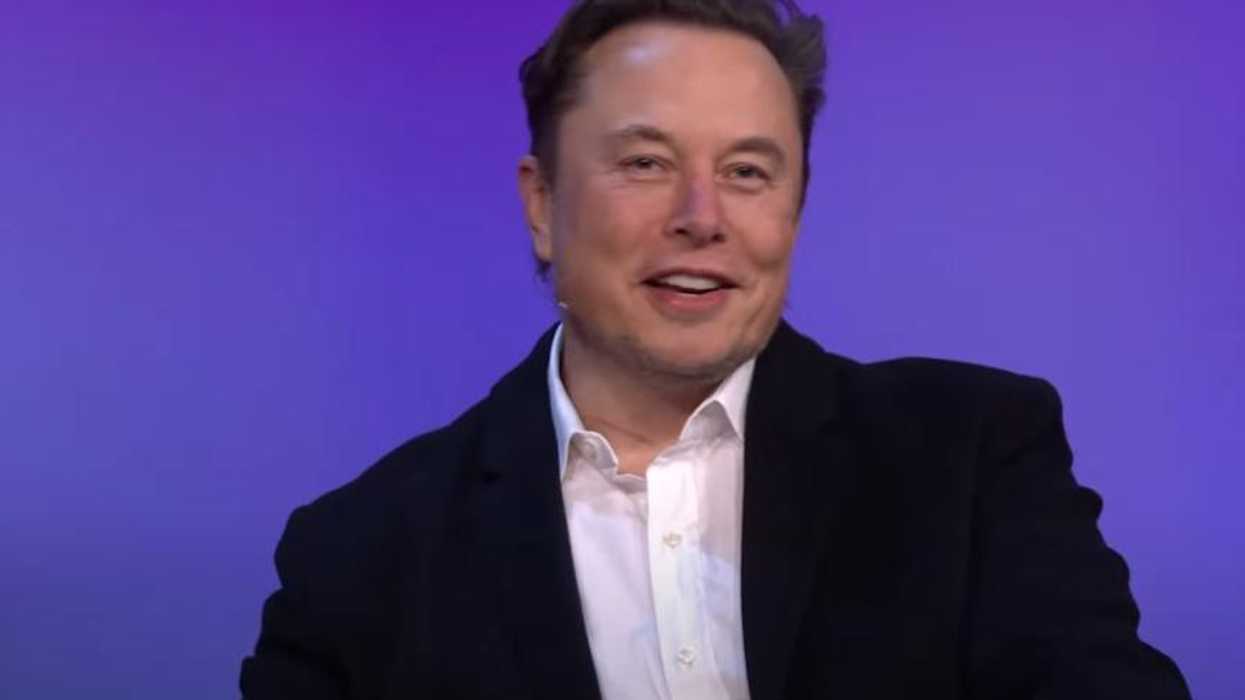
Why does Elon Musk have to be the center of everyone's attention every day? Has he no hobbies? Is running an industrial empire less than a full-time job? Perhaps he's just lonely. Perhaps social media is not filling the need for human companionship — as many a depressed adolescent can explain.

At times the richest man on the planet, Musk certainly has options. He's already done remarkable things, such as supercharge the age of the electric vehicle and send rockets into space. Yet he chooses to pick public fights that offend his customers, while having negligible effect on public policy.

There was no business reason for his buying Twitter other than wanting to control a galactic megaphone. OK. But then he destroys its usefulness by letting a sewer of disinformation mix in with the good stuff. And he attacks the valuable creators who were filling up his feed for free.

Makes no sense unless the Twitter thing is a massively expensive form of psychotherapy to treat a lonely man's need for connection.

Musk seemed to be operating under the illusion that the children could never find another place to post their short messages. Mark Zuckerberg over at Meta, home of Facebook, is showing him otherwise.

Zuck's new social media site, Threads, is now trucking Twitter's user base to its feed. Meanwhile, Twitter ad revenue in the second quarter was down about 40 percent from a year ago, and that was before the Threads launch.

As an exhausting exhibitionist, Musk has company among the Silicon Valley CEOs and tech bros in playing the contrarian game. That means uttering controversial hooey meant, it seems, to set them apart from lesser beings plodding through reality.

Not only did Musk make Twitter worthless as a source of actionable information, he turned off users and advertisers alike by shooting off his mouth. He went so far as to traffic in an antisemitic-flavored reference to George Soros. It's pathetic how unoriginal that was.

The last straw was limiting the number of posts users could read each day. "If you think about it," Ashley Mayer, a venture capitalist, tweeted, "Elon Musk is the greatest PR person of all time. He has us rooting for Meta!?!'

Unlike the other challenges to Twitter that didn't get far, Meta has managed to create an easy-to-use site, many of whose features are familiar to Twitter users. And Meta could plug Threads into its enormous Instagram following. Musk is suing Meta for allegedly stealing Twitter employees and trade secrets. Meta says that's not the case.

Psychiatrists are seeing a surge in drug addiction among financial hotshots, in part to fight off loneliness. A good number, The Wall Street Journal reports, "turn to addiction to mask the reality that achieving their goals — like launching their own fund or making $100 million — can still leave them feeling empty."

Even if they want to develop genuine friendships, the billionaires can't be sure who really likes them, who is only after their money. As for intimate relationships, Musk has had two wives, one of them twice. Now he has none.

One would expect Musk to have better things to do than pursue grudge matches with a tech writer. Sure, Kara Swisher is the dean of tech writers, but is Musk so thin-skinned as to send her an email calling her an "a—-hole"? Apparently, yes.

Funny, but Swisher used to be one of his confidants. Now even she seems to be off Musk's "friend" list, though she's getting great mileage out of his attacks on her. As for Zuckerberg's Twitter replacement, all Threads needs to do now is pick up the tweeters left shipwrecked by an evidently troubled man.

Follow Froma Harrop on Twitter @FromaHarrop. She can be reached at fharrop@gmail.com. To find out more about Froma Harrop and read features by other Creators writers and cartoonists, visit the Creators webpage at www.creators.com.

Reprinted with permission from Creators.

Fraudster Holmes Tried The ‘MeToo’ Defense — And Failed

Fraudster Holmes Tried The ‘MeToo’ Defense — And Failed

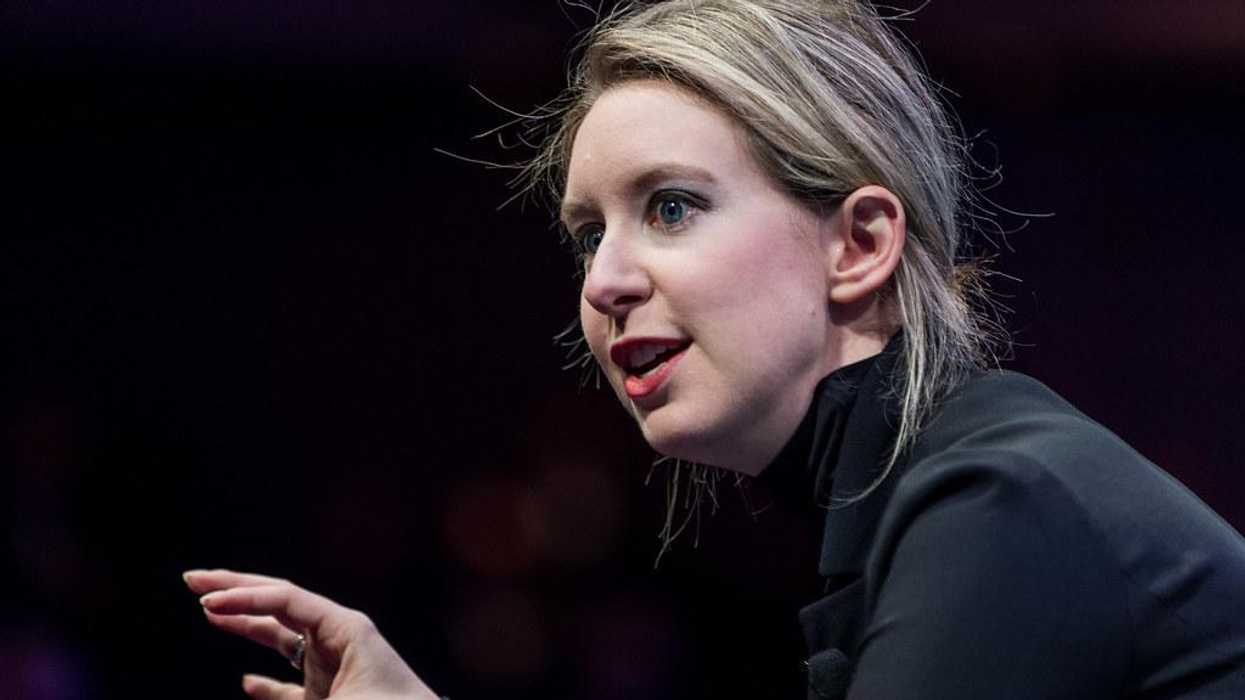
She entered the headlines as the super-confident entrepreneur who founded a wildly successful tech company at 19. She recruited generals and secretaries of state to her board. Her fresh face and long blonde hair made the covers of Forbes, Fortune and Inc. as the business world marveled at her invention that could allegedly do blood tests with just a pinprick on the finger — no more needles in veins.

Elizabeth Holmes was just found guilty on four counts of fraud for lying to investors in her quest to raise money for her company, Theranos. It turned out that her blood-testing technology never worked.

Here was another unlovely story about the dishonest fake-it-till-you-make-it culture of Silicon Valley. But the trial took a still more sour turn when Holmes tried a MeToo defense. She claimed she had been victim of an abusive relationship with ex-boyfriend and former Theranos executive Ramesh "Sunny" Balwani. He took over her brain, she implied, and forced her to have sex.

That Balwani was 20 years older added to the innocent-young-thing account. Holmes also claimed to have been raped as a student at Stanford University: That was the reason she dropped out.

"I needed to kill the person I was" to become an entrepreneur, she testified. That kind of advice would have made for one strange TED Talk.

Suddenly, the woman who used her marketing and lying skills to turn a smoke-and-mirrors invention into, at one point, about $4.5 billion of stock, tried to argue that sexually violent men had ruined her ability to run a company.

David Ring, a lawyer who represents victims of alleged sexual abuse, called Holmes' testimony "an incredibly risky move." The defense wisely did not call an expert to speak on how such abuse might have affected her behavior as CEO.

The prosecutor, meanwhile, told the jury members that they didn't have to consider such factors in reaching a verdict. "The case is about false statements made to investors and false statements made to patients," he said.

She had the Silicon Valley patter down pat. She was always pictured in black turtlenecks like Steve Jobs. Wearing the same outfit every day, fashion critic Vanessa Friedman wrote, was "the techie's equivalent of the heroic uniform." She built on the tech-genius storyline of having dropped out of college like Jobs and Bill Gates.

Holmes had mastered all those concept-explaining hand gestures and deployed the big-talk catchphrases. When CNBC's Jim Cramer asked her about the doubters, Holmes responded: "First they think you're crazy. Then they fight you. And then, all of a sudden, you change the world."

To round out the resume, she became a vegan.

And that's how Holmes lured the likes of former Secretaries of State Henry Kissinger and George Shultz and former Defense Secretary William J. Perry to her board. It's how she extracted $100 million from the very rich family of former U.S. Education Secretary Betsy DeVos.

Slapping the logos of Pfizer and other leading drug companies onto her documents (without their permission) helped bamboozle Walgreens into entering a partnership, a deal that gave further weight to the claims.

The defense did make a good point in arguing that the investors were partly to blame: They had failed to perform due diligence to assess the company's assertions.

One wishes that Holmes had taken her lumps. After all, with little business experience she managed to pull one over on some of the most sophisticated minds in America. And most of those she cheated were rich.

Holmes should have held her head higher. Playing the damsel who went bad as the puppet of a powerful man ought to have been beneath her dignity.

Follow Froma Harrop on Twitter @FromaHarrop. She can be reached at fharrop@gmail.com. To find out more about Froma Harrop and read features by other Creators writers and cartoonists, visit the Creators webpage at www.creators.com.

Shop our Store

Headlines

Editor's Blog

Corona Virus

Trending

World